

From indie companies to global giants, the Toronto Region’s gaming scene is thriving.
When Korean developer Blue Ocean Games recently announced it would establish its North American headquarters in downtown Toronto, it wasn’t an outlier—it was further proof of a growing trend. Over the past decade, the city has quietly built one of the fastest-growing video game development hubs in North America, attracting both multinational publishers and independent creators alike.
Like anything else, it’s hard to pin down the exact origins of a scene, but 2010 is a good candidate when it comes to game development in Toronto. As for the location, that would be a former General Electric warehouse buzzing with creative energy in the heart of the Junction Triangle, a neighourhood that had voted to name itself as such in that same year.
It’s here that Ubisoft chose to open its Toronto HQ, putting both the neighbourhood and the city on the gaming map, crafting blockbusters like Assasins Creed Shadows, Splinter Cell Blacklist, Far Cry 6, and Starlink: Battle for Atlas along the way. But beyond the games themselves, Ubisoft’s arrival in Toronto marked a vote of confidence in the city that generated more momentum than even it could have imagined.
Backed by a $263 million investment from the Ontario government over 10 years, Ubisoft’s arrival amounted to more than job creation (though the studio set an ambitious target of creating 800 jobs); it planted a flag that signalled to the world that Toronto wasn’t just a player in the global tech economy, but an emerging heavyweight in digital entertainment.

Fifteen years later, the ripple effects of Ubisoft’s bold move are undeniable. The Toronto Region’s video game industry has exploded, now employing an estimated 7,000 people directly and supporting thousands more in adjacent industries like design, VFX, and software development.
What does that look like on the ground? Today, Toronto is home to more than 300 game development studios, ranging from indie companies like DrinkBox Studios (creator of Guacamelee!) to major players like Rockstar Toronto (creator of the wildly popular Grand Theft Auto series and Red Dead Redemption), which operates out of Oakville, underscoring that talent and opportunities extend across the Greater Toronto Area.
“Toronto is incredibly supportive of game development, and we’re blown away by the up-and-coming talent in the region,” says Max Hoberman, CEO and founder of Certain Affinity. “It’s an exciting time for us as we make progress on an ambitious original game while continuing to co-develop some of the most exciting games in the industry.”
That enthusiasm isn’t just talk. Certain Affinity’s presence in Toronto is the kind of payoff Ubisoft’s early bet made possible. The Texas-based developer — best known for co-developing mega-franchises like Halo and Call of Duty — has steadily expanded its footprint in the region, viewing Toronto as a critical piece of its long-term strategy.
Think of it like a shopping mall: anchor tenants matter. Studios like Ubisoft, Rockstar Games, and Certain Affinity don’t just make hits—they create gravitational pull. Their presence helps hold the local ecosystem together, attracting new talent, supporting smaller studios, and validating the region as a place where major games and creative careers can be built.
“We’re thrilled to bring these games and new worlds to life,” Hoberman adds. “Our growing Toronto studio continues to be critical to our long-term strategic plans and success.”


And the momentum isn’t slowing. In 2024 alone, Canada’s video game industry contributed an estimated $5.5 billion to the national GDP, a figure Toronto helped drive through both scale and innovation. The city is now home to North America’s third-largest entertainment cluster, and its indie developers make up 55% of Canada’s gaming scene, shaping the character and dynamic of the industry from the ground up.
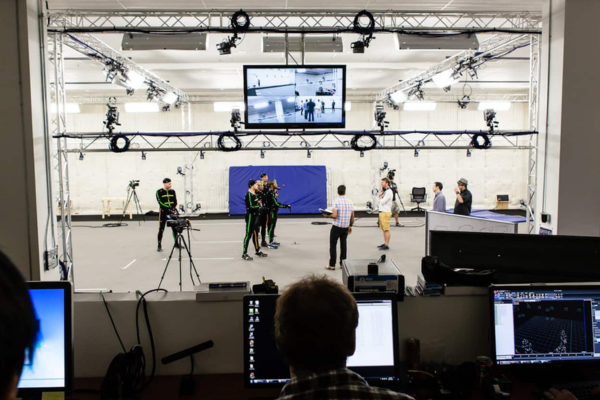
It’s no coincidence that some of the worlds biggest and most popular games are built in Toronto.
Since Ubisoft opened its Toronto studio in 2010, the city has steadily grown into one of the most compelling hubs for game development, not through spectacle, but by aligning with what studios actually need: deep technical talent, global perspective, and a production ecosystem built to scale.
Step into any local studio and you’ll see teams shaped by both code and narrative instinct. Teams are grounded in skill sets honed at institutions like Sheridan, George Brown, and the University of Toronto, where programs in animation, game design, and computer science consistently turn out industry-ready professionals.
That foundation is amplified by Toronto’s cultural makeup. With more than half of the residents born outside Canada, the region offers game developers a creative edge: access to a wide range of lived experiences and storytelling traditions. In an industry moving toward more authentic, inclusive narratives, that kind of diversity is essential.
“Toronto gives us the best of both worlds: the analytics talent we need to run a fund and one of the world’s deepest benches of creative indie developers to invest in. Ontario’s Interactive Digital Media Tax Credit also means we can invest in more teams,” said Damian Lee, CEO of Blue Ocean Games.
Under KRAFTON — the company behind global hits like PUBG: Battlegrounds — Blue Ocean Games recently announced that it would establish its North American headquarters in downtown Toronto. And Blue Ocean isn’t alone, there has been a 27% growth in Interactive Digital Media Companies in the Toronto Region since 2019.
Government support plays a crucial role. Ontario offers a range of incentives which provide substantial tax relief to companies that produce eligible digital products. Programs like the digital media tax credit make Ontario the leading province for digital media employment, outpacing other gaming hubs across the country.


Beyond the numbers, there’s a cultural shift happening too. Gaming is no longer viewed as just entertainment; it’s recognized as an art form, an economic engine, and a key piece of the city’s global identity. Major gaming conferences like the Canadian Gaming Summit have helped foster a dynamic, collaborative community that blurs the lines between indie and AAA.
Looking ahead, Toronto seems poised to cement its status as not just a hotspot, but a global capital of game development. The foundations laid by Ubisoft and other major players prove what smart investment, supportive policy, and creative energy can achieve when they come together.
In the world of gaming, it turns out Toronto isn’t just playing, it’s on the leaderboard.