

The General Immigration Landscape in the Toronto Region
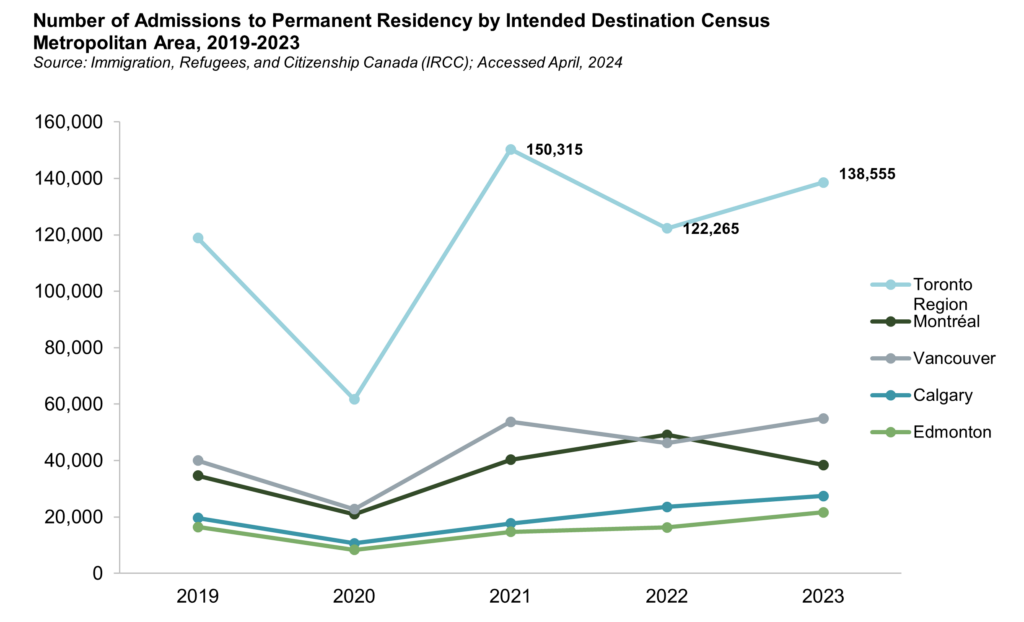
Canada has long been a destination for those seeking new opportunities, welcoming approximately 471,000 immigrants in 2023. Immigrants now make up the largest share of Canada’s population in over 150 years, driving the country’s growth and diversity. Many of these newcomers settle in the Toronto Region, attracted by its vibrant community, cultural diversity, quality education, and economic opportunities.

The Toronto Region’s Significance in the Canadian Immigration Landscape
Toronto is the most multicultural city in the world, with 55% of its population identifying as a visible minority and over 190 languages spoken. Toronto also has the most diverse food scene when compared to thirty of the most populated cities in the world. Of the 387,000 international students in Canada, approximately 23% are enrolled in Toronto Region institutions, alongside over 96,000 post-graduate permit holders. The concentration of educational institutions and talent plays a critical role in maintaining the Toronto Region’s position as a global leader in innovation.
Immigration’s Role in Economic Sustainability
As the Toronto Region continues to welcome newcomers, immigration serves a vital purpose beyond cultural enrichment—it is a critical solution to Canada’s growing demographic challenges.
Canada’s declining birth rate reached a historic low of 1.26 children per woman in 2023, well below the rate necessary to maintain a population without immigration. In addition, approximately one in five Canadians is over 65, with projections showing this will rise to one in four by 2030. These trends collectively increase pressure on the labour market and the delivery of public services.
Immigration directly addresses these challenges by driving population growth and sustaining the working-age population. Between 2016 and 2022, 62.3% of newcomers were of core working age (24-54 years), ensuring a steady flow of skilled individuals contributing to economic activity. Since the mid-2010s, immigrants have accounted for 63% of the labour force growth in Ontario, filling gaps in healthcare, trade, and agriculture among others. In the Toronto Region, immigrants have significant representation in sectors such as professional, scientific and technical services, health care and social assistance, and manufacturing.
The Micro Level – The Challenges of Starting Anew
Beneath the positive statistics lie the deeply personal struggles of immigrants adapting to a new life. While the Toronto Region offers significant opportunities, newcomers often face a range of challenges that can make their transition difficult.
Credential Recognition
Although 64% of core working-age immigrants who landed between 2016-2021 held a bachelor’s degree or higher, 19.6% of recent immigrants experience overqualification, leading to underemployment and underutilization of their skills.
Job Market Integration
Securing jobs aligned with prior experience can be difficult, with newcomers earning 15% less than non-immigrants of the same age group due to limited local experience or unrecognized qualifications.
Building Support Networks
Starting over in a new country can feel isolating. Newcomers must often navigate daily tasks like using public transportation or managing banking systems without the guidance of a strong support network. 74% of recent immigrants report higher levels of mental health issues, comparatively higher than established immigrants and Canadian-born.
The Toronto Region – A Hub of Opportunities and Support
Despite the challenges that immigrants face, their resilience is evident, and the Toronto Region offers significant support to newcomers. Toronto’s exceptional diversity creates an environment where newcomers can integrate and thrive.
The region is home to numerous immigrant support organizations, such as the Newcomer Centre of Peel, ACCES Employment, and Access Alliance to name a few, which offer services such as language classes, job training, and community-building activities. Newcomers can also find support in their transition through programs like the Newcomer settlement program, Ontario Bridge Training Program, and Global Experience Ontario..
Toronto’s multicultural neighbourhoods offer immigrants a sense of familiarity, with access to cultural food, festivals, and places of worship. Major regional events such as Toronto Caribbean Carnival, Mississauga’s Carassauga Festival (Canada’s largest multicultural Festival), and the Toronto Korean Festival (Canada’s largest Korean festival) celebrate cultural diversity and create opportunities for cultural exchange.
Entrepreneurship plays a vital role in the success of many immigrants, with 32% of all business owners with paid staff being immigrants, with prevalence in sectors such as construction, professional services, health care, and retail trade. Programs like Futurpreneur Canada provide mentorship and resources for immigrant entrepreneurs.
Conclusion
The success stories of immigrants in the Toronto Region and Canada go beyond economic benefits and emphasize the community’s strength. From career advancement to cultural integration initiatives, the Toronto Region will remain a top destination for immigrants, strengthening Canada’s global position.